
Can Self-Reflexology Help You Feel More Balanced?
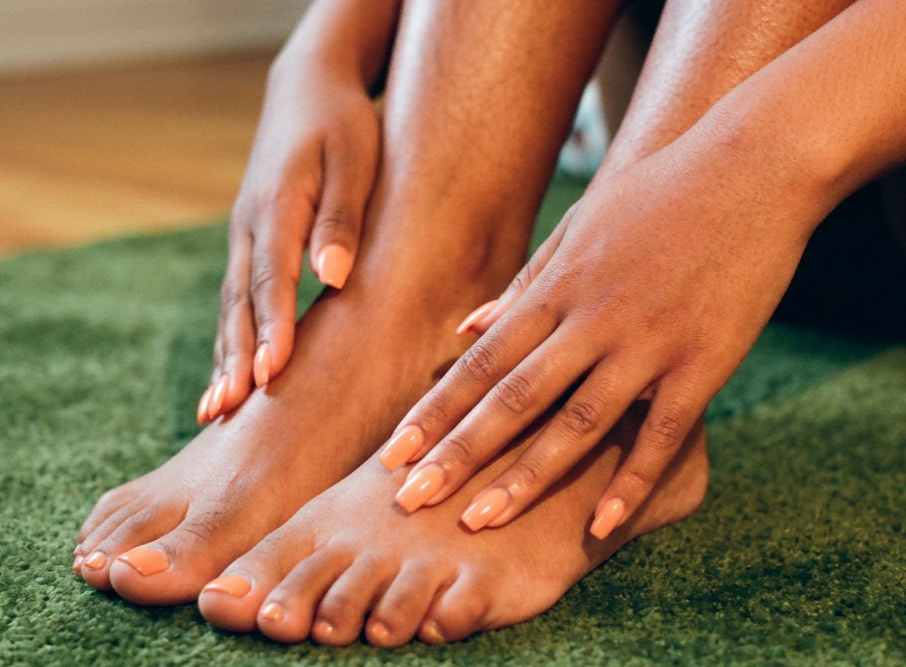
A simple way to reconnect with your body, calm your nervous system and create a little more balance in your day.
We spend so much of our time thinking, rushing, working and responding to everything around us that it can be surprisingly easy to become disconnected from our own bodies.
Sometimes what we need isn’t another productivity hack or wellness trend. It’s simply a few quiet minutes to stop, breathe and pay attention to ourselves.
This is one of the reasons I love self-reflexology.
What is self-reflexology?
Reflexology is a complementary therapy based on the principle that different areas of the feet correspond to different parts of the body.
While there isn’t strong scientific evidence that working a particular reflex point directly changes the corresponding organ, reflexology can be a wonderfully relaxing form of touch and bodywork.
For many people, the experience is about much more than the feet.
It’s about slowing down.
Breathing.
Feeling grounded.
And giving your nervous system an opportunity to move away from the constant demands of everyday life.
Can you really “balance” your body with reflexology?
I think the word balance is useful — as long as we are clear about what we mean by it.
I wouldn’t suggest that pressing a particular point on your foot can “rebalance” an organ or treat a medical condition.
But your body and nervous system are constantly responding to what is happening around you. Stress, lack of sleep, emotional pressure and being permanently switched on can all affect how we feel.
Taking ten minutes to sit quietly, breathe slowly and massage your feet can be a very different experience from rushing through your day.
The combination of touch, breathing, attention and relaxation can help you feel calmer and more connected to your body.
And sometimes that is exactly the kind of balance we are looking for.
Why your feet?
Our feet work incredibly hard.
They carry us all day, are often squeezed into shoes and rarely receive the same attention that we give to other parts of our bodies.
Yet they are also wonderfully accessible.
You don’t need a treatment room, special equipment or an hour of free time.
You can practise self-reflexology sitting on the sofa, before bed, after a bath or whenever you have a few quiet minutes.
And there’s something particularly grounding about bringing your attention down to your feet.
A simple self-reflexology ritual
You don’t need to know every reflex point to begin.
Try this simple routine:
Start by warming your feet.
Rub your feet together or massage them with your hands for a minute or two.Slow everything down.
Take a few deep, comfortable breaths and allow your shoulders and jaw to relax.Work across the whole foot.
Use your thumb to gently walk across the sole, moving slowly rather than applying lots of pressure.Spend a little longer on areas that feel tight or sensitive.
Don’t try to “break through” tenderness. Reflexology shouldn’t be about forcing painful areas.Finish with gentle strokes.
Massage from the heel towards the toes and around the sides of the foot before finishing with a few slow, calming breaths.
Even five or ten minutes can become a lovely daily ritual.
The real benefit may be the pause
One of the things I love most about reflexology is that it encourages us to stop.
When you are giving yourself a treatment, you aren’t scrolling through your phone, answering emails or thinking about the next thing on your list.
You are simply there.
Feeling your feet.
Feeling your breath.
Paying attention.
That shift in attention can be incredibly valuable.
And you don’t have to wait until you’re stressed to practise it.
Self-reflexology can become something you do regularly as part of your general wellbeing — a little ritual that reminds you to check in with yourself.
Want to learn more than the basics?
If you’ve ever thought, “I’d love to learn reflexology but I don’t want to train as a professional,” that’s exactly why I created my reflexology guides.
My Reflexology PDFs are designed for people who want to learn practical techniques they can use for specific reasons at home. Whether that be to balance menopausal hormone shifts, tackle sleep problems, or to alleviate anxiety.
They are particularly suitable if you want to:
● Learn some simple reflexology techniques for yourself
● Practise on your partner, friends or family
● Develop confidence with foot massage and reflexology techniques
● Create a relaxing self-care ritual
● Learn from the comfort of your own home
● Understand how to work through a more complete reflexology routine
They are educational guides rather than professional qualifications, so they aren’t intended to replace accredited reflexology training or enable you to practise professionally.
But if you’re simply curious about reflexology and want to learn how to use it at home, they are a great place to start.
Give your feet a little attention
You don’t always need to do something complicated to take better care of yourself.
Sometimes ten quiet minutes, a comfortable chair and your own two hands are enough to create a small moment of calm.
Your feet have carried you through your whole day.
Perhaps it’s time to give them something back.
Explore my reflexology guides and start learning today.